Why Your Creative Work Will Never Feel Good Enough (And What to Do About It)

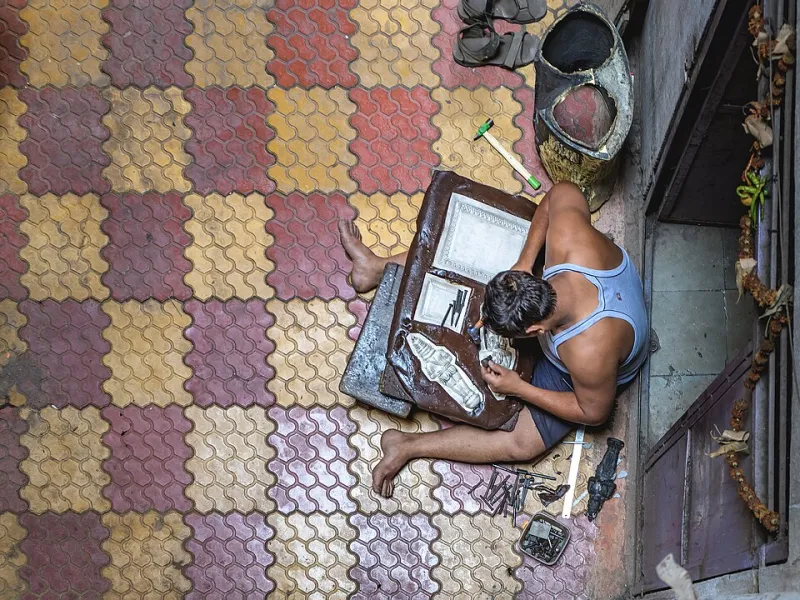
Photo: Jan Vašek, CC0, via Wikimedia Commons
There's a specific kind of frustration that hits when you finish something you were genuinely proud of — a painting, a short film, a blog post, a playlist — and then you make the mistake of opening your phone. Within sixty seconds, you've seen seventeen versions of what you made, except they're glossier, more confident, and apparently created by people who have their entire lives figured out.
And just like that, the thing you made feels small.
This is the comparison trap. And if you're spending any time online — which, let's be honest, all of us are — you're probably living in it more than you realize.
The Highlight Reel Problem
Here's the thing nobody says out loud enough: what you're comparing your work to isn't real life. It's a curated feed of greatest hits. The designer whose portfolio makes your jaw drop? You're not seeing the thirty rejected concepts, the client who ghosted them, or the three months they spent redoing the same logo. You're seeing the final, polished, filtered version of their best day.
Psychologists call this social comparison theory — the idea that humans naturally evaluate themselves by measuring against others. It's not a character flaw; it's wiring. But the internet has taken that ancient instinct and plugged it into a firehose. We're no longer comparing ourselves to the handful of people in our immediate circle. We're stacking our work up against millions of creators, globally, simultaneously, in real time.
No wonder nothing ever feels like enough.
Research from the American Psychological Association has consistently linked high social media use with increased feelings of inadequacy, especially among people who engage in upward comparison — meaning they primarily look at people doing better than them. For creative people, this is almost unavoidable. We seek out work we admire. We follow people who inspire us. And then we quietly destroy ourselves comparing our behind-the-scenes to their highlight reel.
The Internal vs. External Metrics Shift
The most practical thing you can do is boring and unglamorous, which is probably why most people skip it: define what success looks like for you, in writing, before you open any platform.
External metrics — likes, shares, follower counts, viral moments — are seductive because they feel objective. Numbers are numbers. But they measure reception, not quality. They measure timing, algorithm quirks, and whether you happened to post at the right moment on the right day. A poem that changes one person's life might get twelve likes. A mediocre meme might get fifty thousand.
Internal metrics are messier but more honest. Did you try something technically difficult? Did you solve a creative problem you've been stuck on for weeks? Did the finished piece actually say what you meant to say? Did you enjoy the process, even a little?
These are the questions that tell you whether your work is growing — not the dashboard.
Try keeping a simple creative log. Not a portfolio. Not a content calendar. Just a running document where you note what you made, what challenge you were working through, and whether you moved the needle on that challenge. Over time, you'll start to see progress that a follower count could never show you.
Comparison as Information, Not Verdict
Here's a reframe that actually helps: comparison isn't inherently the enemy. It becomes toxic when you use it as a verdict — they're better, therefore I'm failing. But used differently, it can be a map.
When you see someone's work and feel that familiar gut-punch of inadequacy, pause. Get curious instead of defeated. What specifically is making you feel that way? Is it their composition? Their editing style? Their confidence in sharing? That friction is pointing you toward something you want to develop. It's not evidence of your inadequacy — it's a clue about your next creative edge.
Some of the best creative development happens when you get specific about what you admire and then chase it deliberately, on your own terms, with your own voice.
Practical Ways to Break the Cycle
Do a feed audit. Unfollow or mute accounts that consistently make you feel worse about your own work. This isn't about avoiding inspiration — it's about curating an environment that fuels you rather than deflates you. Your feed should feel like a conversation, not a competition.
Create before you consume. Make it a rule to spend at least thirty minutes working on your own stuff before you check anyone else's. This protects your creative headspace during the window when it's freshest and most vulnerable to outside noise.
Finish more things. Comparison thrives in the gap between your idea and execution. The more you complete — even imperfectly — the more evidence you accumulate that you're actually doing the work. Shipping something messy beats polishing something endlessly.
Find your one percent. Instead of measuring yourself against the top ten percent of creators in your space, try to be one percent better than you were last month. That's a race you can actually win, and it compounds over time in ways that chasing external validation never will.
The Longer Game
Here in Souvik's World, we talk a lot about building a creative life that actually fits the person living it — not the person the algorithm wants you to be. And the truth is, that kind of life requires a different scoreboard.
The creators who seem to have the most genuine longevity — the ones who are still making things twenty years in, who still seem excited about their work — almost universally describe a point where they stopped measuring themselves against everyone else and started measuring themselves against their own previous work.
That shift doesn't happen overnight. But it starts with recognizing that the comparison trap isn't a reflection of how good your work is. It's a reflection of how loud the noise around you has gotten.
Turn it down a little. Make the thing. See what happens.