Scrolling Through Someone Else's Best Day and Calling It Your Benchmark
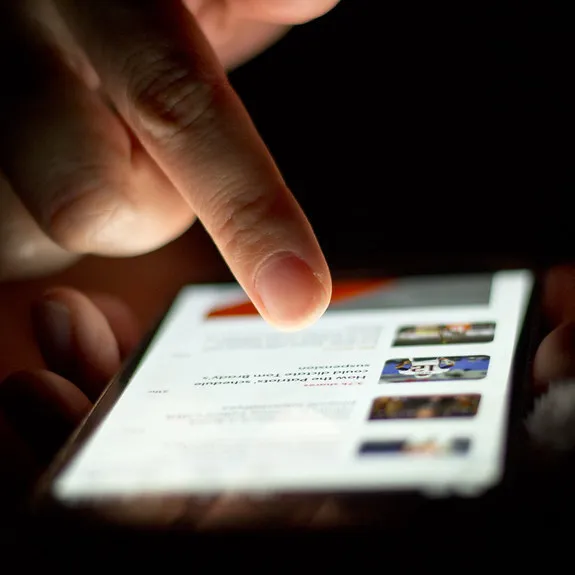
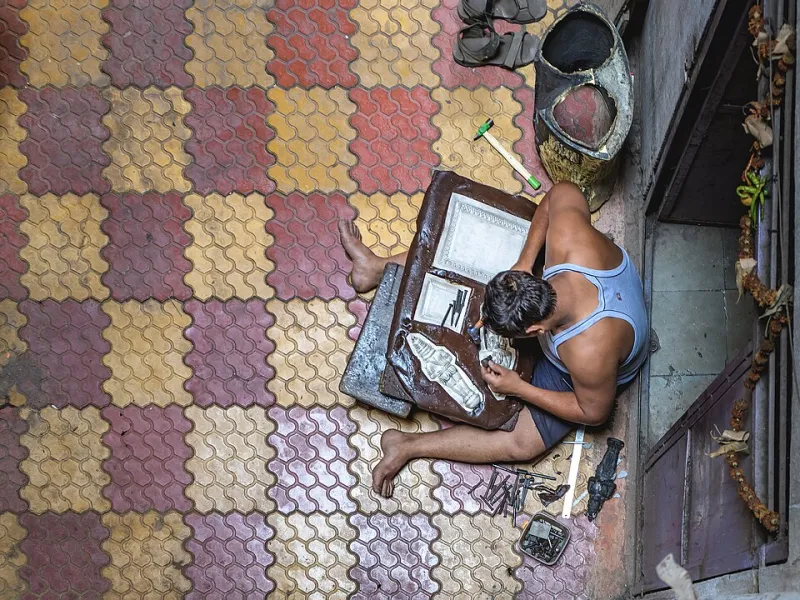
Photo: Japanexperterna.se, CC BY-SA 2.0, via Wikimedia Commons
The Feed Is a Lie (But a Really Convincing One)
Let's be honest about something uncomfortable. You're sitting there, halfway through a project you actually care about, and then you open your phone. Three seconds later you're watching some creator announce their six-figure course launch, their sold-out product drop, their glowing testimonials — and suddenly your half-finished thing feels like garbage.
You didn't change. Your project didn't change. The algorithm just handed you someone else's highlight reel and your brain decided to treat it like a progress report.
This is the comparison trap, and it's not just an annoyance. For a lot of people, it's the single biggest reason creative projects die before they ever get a real shot.
What's Actually Happening in Your Brain
Social comparison is genuinely hardwired into us. Psychologist Leon Festinger figured this out back in 1954 — we measure our own abilities and opinions by looking at the people around us. That instinct made sense when "around us" meant neighbors and coworkers. It doesn't scale well to 400 million Instagram users.
What makes it worse is the asymmetry. You have full access to your own doubts, your bad drafts, your 2 a.m. panic spirals. You have zero access to anyone else's. So you end up comparing your unfiltered behind-the-scenes to their highlight reel, and the math just doesn't work in your favor.
A 2021 study published in the Journal of Social and Clinical Psychology found that even passive social media use — just scrolling, not posting — was linked to higher rates of creative self-doubt and reduced motivation to pursue personal goals. You don't even have to engage. You just have to watch.
The "Overnight Success" Illusion Is Especially Brutal for Creators
Here's something that doesn't get talked about enough: the creators you're comparing yourself to have almost certainly been doing this way longer than their follower count suggests.
The writer with 80,000 newsletter subscribers probably spent four years writing to 200 people. The designer whose work keeps going viral likely has a hard drive full of projects that never landed. The podcaster with the slick production started out recording on their phone in a closet.
None of that shows up in the feed. What shows up is the result, stripped of all the context that would actually make it useful to you.
And social media platforms aren't neutral here. The algorithm actively surfaces content that's already performing well — which means you disproportionately see success stories, polished work, and confident announcements. Struggle doesn't get boosted. Uncertainty doesn't go viral. The messy middle of anyone's creative journey is almost entirely invisible.
When Comparison Becomes Abandonment
The real damage isn't that comparison makes you feel bad in the moment. It's what it does to your decision-making.
Creators who are deep in comparison mode tend to abandon projects at exactly the wrong time — right before the work gets interesting. They pivot constantly, chasing whatever seems to be working for someone else instead of developing their own voice. They start second-guessing their niche, their aesthetic, their whole approach, not because those things are actually wrong but because someone else is doing something differently and getting applause for it.
If you've ever scrapped a project because it "wasn't as good" as something you saw online, you've felt this firsthand. The work didn't fail. Comparison killed it.
Measuring Yourself Against Yourself Instead
The fix isn't to quit social media (though taking breaks genuinely helps). It's to build a different measuring system.
Start a private progress log. Once a week, write down one thing you did this week that you couldn't have done six months ago. It doesn't have to be impressive. It just has to be true. Over time, you build a record of your own growth that's immune to what anyone else is doing.
Define your own metrics before you open the app. What does success actually look like for this project, for you, right now? Write it down. When you have a concrete personal benchmark, it's harder for someone else's numbers to hijack your sense of progress.
Audit your feed with intention. Follow people who make you want to create, not people who make you want to quit. That's not jealousy management — it's just choosing your inputs carefully. The people who inspire you to work are assets. The ones who consistently make you feel behind are a tax on your energy.
Delay the scroll. Don't open social media before you've done at least one piece of actual creative work for the day. This one change alone can dramatically shift whether you're creating from a place of momentum or from a place of inadequacy.
The Part Nobody Posts About
Here's what's sitting behind most of those polished feeds: doubt, revision, rejection, and a lot of things that didn't work. Not because those creators are hiding it to manipulate you, but because that stuff just doesn't make good content.
The creator you're comparing yourself to is probably looking at someone else's feed and feeling the exact same thing you're feeling right now.
Your creative confidence doesn't need other people's benchmarks. It needs evidence of your own movement — however slow, however imperfect. Keep that evidence somewhere you can actually see it. And the next time the algorithm tries to hand you someone else's best day as a measuring stick, remember: you're not behind. You're just in a different chapter.